About the Growth Factors Category
The Growth Factors category groups research compounds — predominantly synthetic peptides — that are studied in laboratory and in-vitro settings in connection with cellular signalling and related research models. Every item is supplied by Prototides as a lyophilized powder strictly for qualified research use, and is not intended for human or veterinary consumption, therapeutic use, or diagnostic use. This guide explains what the category groups, how each compound is characterized analytically, the documentation that accompanies it, and the specification fields worth comparing — framed around records and methods, never around claims of effect.
What the Category Includes
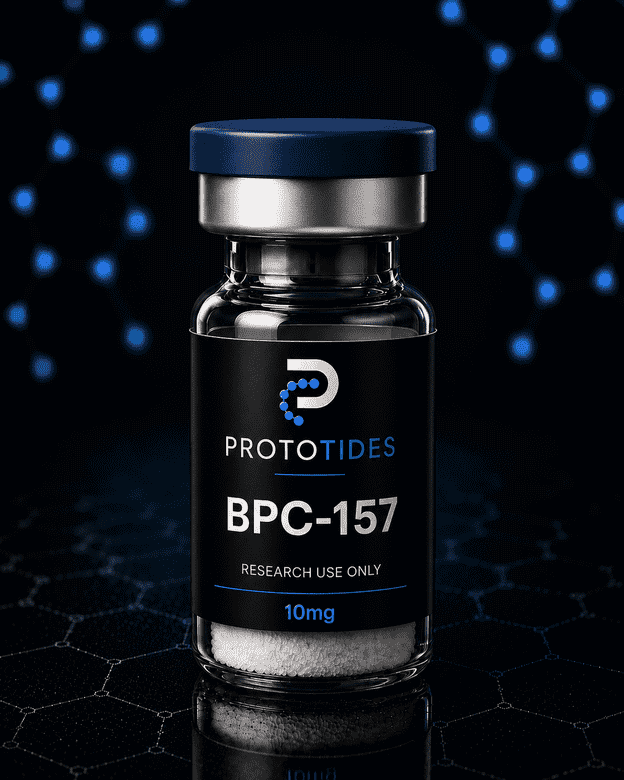
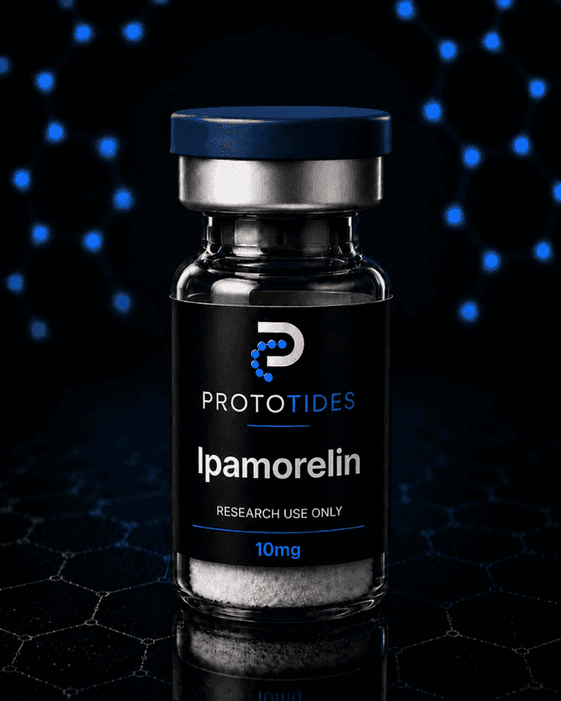
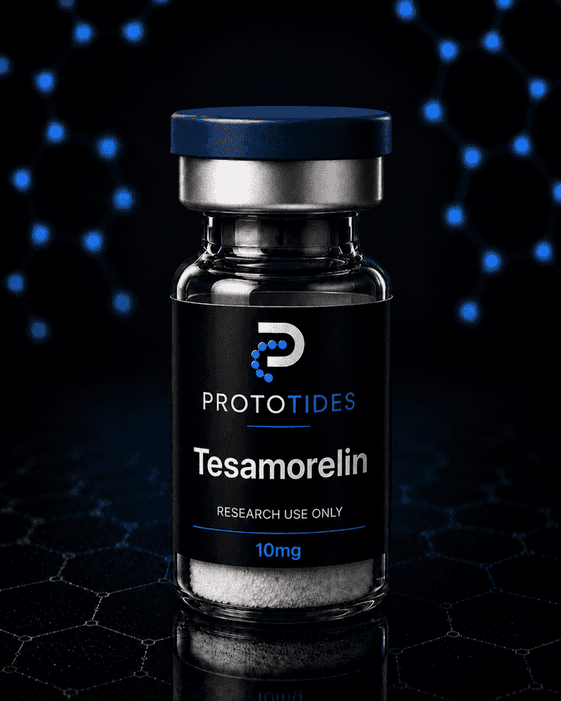
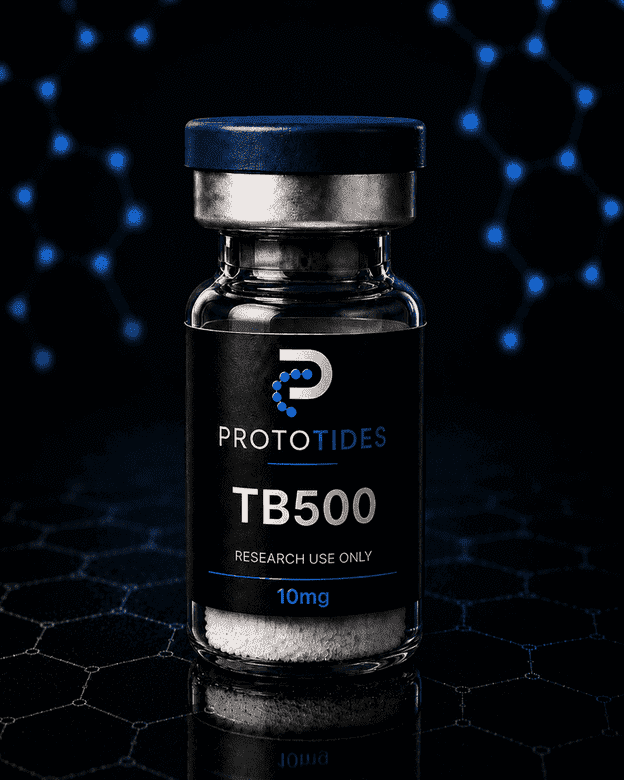
The compounds here are united by structural classification and research context, not by any asserted activity. They are synthetic peptides whose sequences correspond to — or are fragments of — naturally occurring signalling peptides and proteins described in the scientific literature. Representative materials in the catalog include BPC-157 (a synthetic pentadecapeptide), TB-500 (a synthetic peptide based on a region of thymosin β4), Ipamorelin (a synthetic pentapeptide with an amidated C-terminus), and Tesamorelin (a 44-residue analog of growth-hormone-releasing factor). Each is a defined synthetic sequence, which is precisely what allows it to be reproduced consistently and compared from lot to lot.
How These Compounds Are Characterized
What distinguishes the materials here is documentation, not description. Each lot is characterized by two complementary, orthogonal analytical methods:
- Reverse-phase HPLC (RP-HPLC) quantifies chromatographic purity as an area-percent value for the tested sample under a stated method.
- LC-MS confirms identity by comparing the measured molecular mass against the value calculated from the defined sequence.
The two answer different questions — how pure, and what is it — and are reviewed together. The distinction is explained in our guide to how identity and purity are verified.
Documentation and Lot Traceability
Every lot ships with a lot-specific Certificate of Analysis recording its purity result, mass confirmation, and release date, alongside the supporting RP-HPLC report and an independent third-party analytical report. A unique lot identifier ties these records to the physical material, and a representative lot can be checked with the lot-verification tool. For how to read these records without overstating them, see the guide to Certificates of Analysis and batch traceability and lot documentation.
Comparing Compounds in This Category
Prototides standardizes the same verifiable specification fields across every product so they can be compared directly, rather than inferred from prose:
- Reported RP-HPLC purity (area %)
- LC-MS identity confirmation
- Molecular formula and mass, where defined
- Appearance and research-preparation solubility
- A batch-specific lot number that resolves to the COA
- Storage condition
Each product page also links to a per-compound research profile that expands on its molecular identity, analytical characterization, and documentation — the deepest reference for any single material.
Storage and Handling
Handling follows the catalog-wide standard: the lyophilized powder is stored at -20 °C, protected from light, and handled only by qualified researchers using appropriate laboratory practice. The difference between the lyophilized reference form and a reconstituted working solution, and the role of the cold chain, are covered in cold-chain and -20 °C storage.
Research-Use Scope
Materials in this category are supplied for laboratory research use only. The category grouping, and any structural or analytical description on this page, are not statements about biological effect, activity, or suitability for any application. Nothing here is intended for human or veterinary consumption, diagnosis, treatment, or therapeutic use; suitability for a given research workflow is determined by the investigating laboratory against its own requirements and SOPs.