Semax
In stock — ships within 48h
1 of 2 sizes available
Select fill size
Only 10 left in this lot
Bulk Savings
Save more when you buy more — the discount applies automatically.
- Verified by LotEvery batch documented
- Third-Party TestedCOA on every order
- 48h DispatchFast, tracked fulfillment
- Secure CheckoutEncrypted & PCI-compliant
For laboratory research use only. Not for human consumption, therapeutic use, diagnostic use, or veterinary use. By purchasing, you confirm you are qualified to handle research materials.
Research overview
About Semax
Semax is a synthetic peptide analogue based on a short fragment of adrenocorticotropic hormone (the ACTH 4-7 region), extended with a proline-glycine-proline sequence that increases its stability as a defined molecule. It is registered under CAS 80714-61-0 with the molecular formula C₃₇H₅₁N₉O₁₀S and a reported mass of approximately 813.9 Da. As a fully synthetic sequence it is reproducible from lot to lot, and it is offered solely as a research-grade peptide for qualified laboratory use within the Cognitive Research category.
Manufactured by solid-phase peptide synthesis, Semax is supplied as a white lyophilized powder in 5mg and 10mg presentations. The freeze-dried format is selected because it produces a dry, stable solid that ships and stores reliably under cold conditions, and the peptide readily dissolves in water-based research preparations when a working solution is prepared for an in-vitro protocol. The two presentation sizes let researchers match quantity to the scale of an experiment. Semax contains a single sulfur-bearing methionine residue, which is worth noting during handling because methionine can be susceptible to oxidation; minimizing exposure to air and keeping solutions cold are common precautions. Working solutions are often prepared immediately before use rather than stored for extended periods, which limits oxidation of the methionine residue.
Analytical characterization is performed on each lot using two orthogonal techniques. Reverse-phase HPLC resolves the target from synthesis-related impurities using a solvent gradient, presenting it as a single dominant peak under UV detection so that chromatographic purity can be evaluated. LC-MS then confirms molecular identity by comparing the measured mass to the expected mass of the sequence. Because the sequence carries an oxidation-prone methionine residue, the LC-MS profile is also a useful check that the measured mass corresponds to the intact, unoxidized peptide for that lot.
Recommended research handling follows standard peptide practice: store the lyophilized powder at -20 °C, protected from light, and keep any reconstituted material cold while minimizing freeze–thaw cycles. Dividing a reconstituted stock into single-use aliquots is a common way to maintain a stable analytical reference across repeated experiments and to avoid repeatedly warming and refreezing the bulk solution. Buffer, working concentration, and handling parameters are set by the researcher.
Each order ships with lot-traceable documentation — Certificate of Analysis, RP-HPLC purity report, and independent third-party report — keyed to a verifiable lot identifier that links the records to the physical material. Semax is supplied for laboratory research use only; it is not intended for human or veterinary consumption and carries no therapeutic or diagnostic representation of any kind.
Research & Studies
Published research
Selected peer-reviewed literature characterizing Semax. These are third-party references about the molecule, provided for research context — not claims about the material supplied.
Brain Research · 2006 · Dolotov et al.
Semax, an analog of ACTH(4-10) with cognitive effects, regulates BDNF and trkB expression in the rat hippocampus
A rodent-model study examining expression of BDNF and its trkB receptor in the hippocampus following administration of the ACTH(4-10) analogue.
Cellular and Molecular Neurobiology · 2010 · Dmitrieva et al.
Semax and Pro-Gly-Pro activate the transcription of neurotrophins and their receptor genes after cerebral ischemia
A rodent-model study analyzing transcription of neurotrophin and receptor genes in an experimental cerebral-ischemia paradigm.
Technical reference
Product details
Catalog
Related compounds
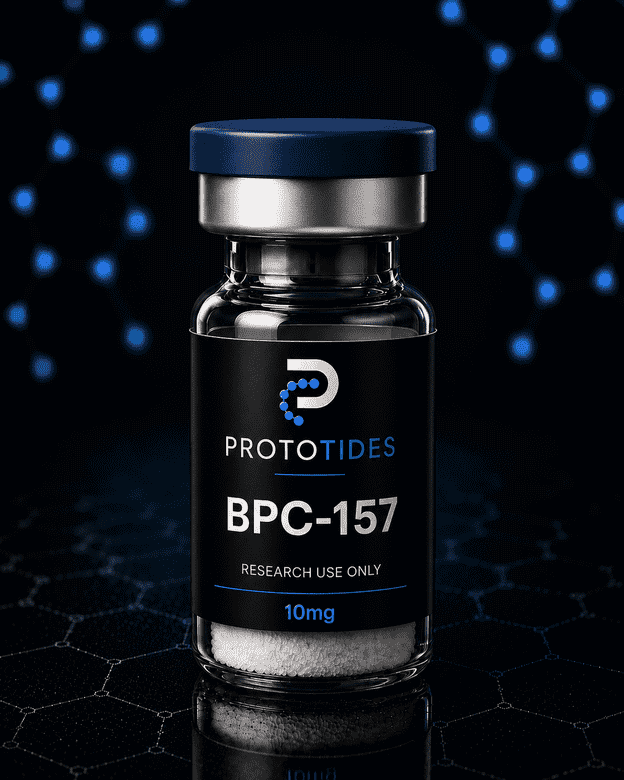
Spec sheet
- Form
- Lyophilized powder
- Storage
- -20 °C, dark
- Batch docs
- COA included
- Category
- Growth Factors
- Use
- RUO only
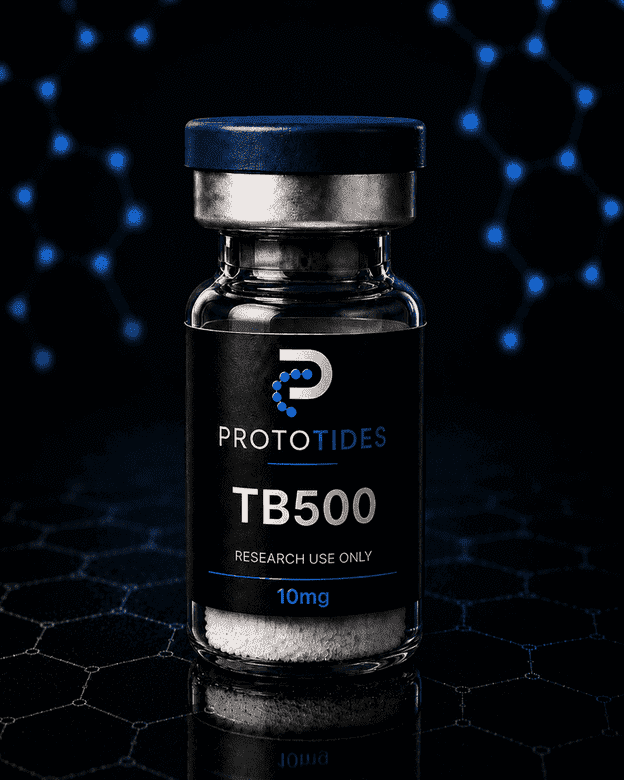
Spec sheet
- Form
- Lyophilized powder
- Storage
- -20 °C, dark
- Batch docs
- COA included
- Category
- Growth Factors
- Use
- RUO only
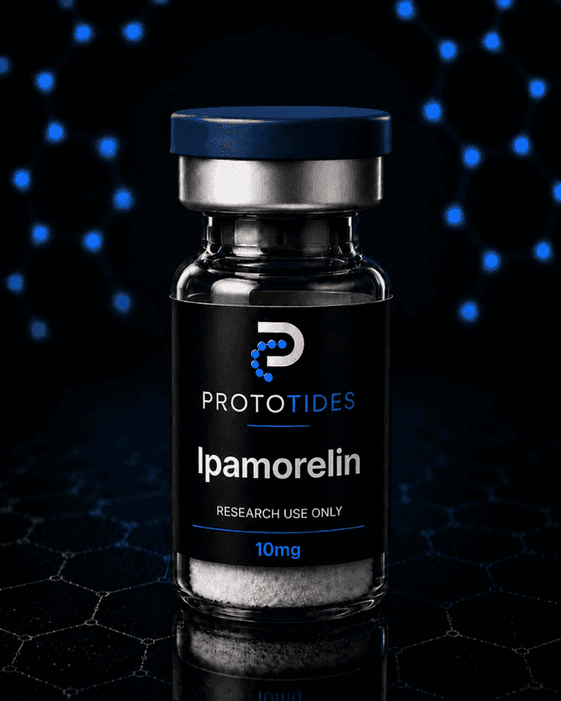
Spec sheet
- Form
- Lyophilized powder
- Storage
- -20 °C, dark
- Batch docs
- COA included
- Category
- Growth Factors
- Use
- RUO only
Research Library
Research profile & guides
Compound Profiles
Semax Research Profile
A reference profile for Semax, a synthetic peptide analogue — its molecular identity, how each lot is characterized by RP-HPLC and LC-MS, the documentation supplied, and storage considerations. Strictly research-use framing.
Documentation
Understanding Certificates of Analysis
A Certificate of Analysis is the analytical record for a specific lot of research material. This guide explains the fields a COA commonly includes, how to read them without overstating conclusions, and where a COA's limits begin.
Storage
Research Material Storage Practices
Storage requirements are material dependent and defined by product-specific documentation. This guide covers general environmental factors, packaging integrity, inventory records, and material status segregation for laboratory workflows.
For research use only. Not for human or veterinary consumption. Not a drug, food, or cosmetic. No therapeutic or diagnostic claims are made. See our research use policy.