GHK-cu
In stock — ships within 48h
1 of 2 sizes available
Select fill size
Bulk Savings
Save more when you buy more — the discount applies automatically.
- Verified by LotEvery batch documented
- Third-Party TestedCOA on every order
- 48h DispatchFast, tracked fulfillment
- Secure CheckoutEncrypted & PCI-compliant
For laboratory research use only. Not for human consumption, therapeutic use, diagnostic use, or veterinary use. By purchasing, you confirm you are qualified to handle research materials.
Research overview
About GHK-cu
GHK-Cu is a copper(II)-binding tripeptide complex — the sequence glycyl-L-histidyl-L-lysine coordinated to a copper ion — originally described in the scientific literature as a peptide isolated from human plasma. It is catalogued under CAS 89030-95-5 with the molecular formula C₁₄H₂₄CuN₆O₄ and a reported mass of approximately 403.9 Da. The histidine residue provides the principal coordination site for the bound copper, and the complex is supplied exclusively as a research-grade material for qualified laboratory use.
Because of its bound copper, GHK-Cu is presented as a characteristic blue lyophilized powder, which visually distinguishes it from the white powders typical of uncomplexed peptides. The color arises from the copper coordination itself and is a useful first-glance indicator that the complex is intact. It is offered here in 50mg and 100mg presentations to suit different research scales, and it is readily soluble in water for the preparation of laboratory working solutions. Researchers commonly confirm that the reconstituted solution retains its characteristic blue tint, since a loss of color can indicate that an incompatible solvent or extreme pH has disrupted the copper coordination; a mild, near-neutral aqueous solvent is therefore generally preferred.
Each lot is characterized analytically with two complementary methods. RP-HPLC separates the target complex from related species using a solvent gradient and resolves it as a dominant chromatographic peak under UV detection, allowing chromatographic purity to be assessed. LC-MS confirms identity by matching the measured mass to the theoretical value for the tripeptide–copper complex. Because the bound copper is integral to the molecule's identity, the mass measured by LC-MS reflects the intact complex, confirming that the copper coordination has been retained through synthesis and purification.
For storage and handling in a research environment, the lyophilized powder is kept at -20 °C and protected from light, conditions that help maintain the integrity of the copper-coordinated complex. Reconstituted solutions are typically divided into aliquots and kept cold to limit freeze–thaw exposure. The selection of solvent system, working concentration, and downstream handling is determined by the researcher according to the requirements of the specific analytical or in-vitro protocol.
Every order includes lot-traceable documentation: the Certificate of Analysis, the RP-HPLC purity report, and the independent third-party report, each linked to a unique lot identifier that can be verified before use. GHK-Cu sits in the Growth Factors research category at Prototides and is provided for laboratory research use only. It is not a drug, cosmetic, food, or supplement, and it is not intended for human consumption, therapeutic application, diagnostic use, or veterinary use.
Research & Studies
Published research
Selected peer-reviewed literature characterizing GHK-cu. These are third-party references about the molecule, provided for research context — not claims about the material supplied.
International Journal of Molecular Sciences · 2018 · Pickart & Margolina
Regenerative and Protective Actions of the GHK-Cu Peptide in the Light of the New Gene Data
A review examining the copper-binding tripeptide and cellular pathways associated with it in the published gene-expression and biochemical literature.
BioMed Research International · 2015 · Pickart et al.
GHK Peptide as a Natural Modulator of Multiple Cellular Pathways in Skin Regeneration
A review of in-vitro and gene-expression studies characterizing the GHK sequence and its copper complex across a range of cellular pathways.
Technical reference
Product details
Catalog
Related compounds

Spec sheet
- Form
- Lyophilized powder
- Storage
- -20 °C, dark
- Batch docs
- COA included
- Category
- Growth Factors
- Use
- RUO only
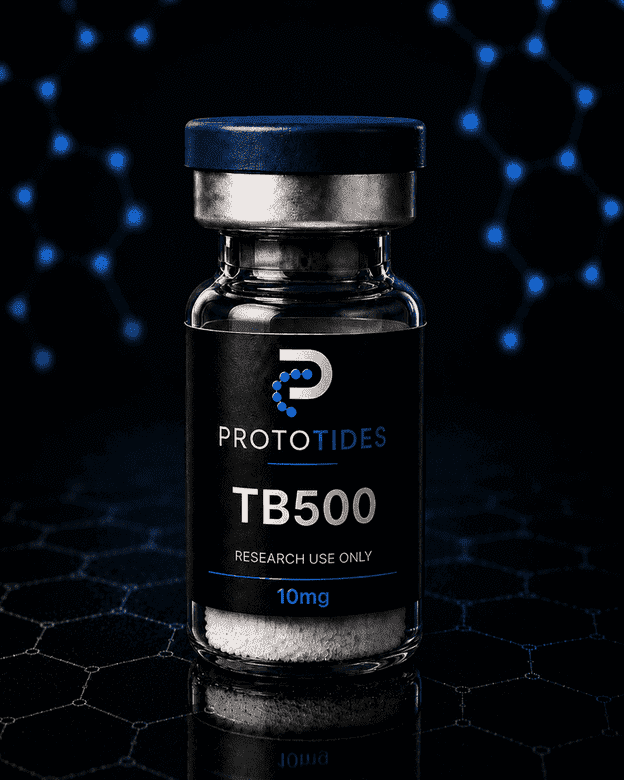
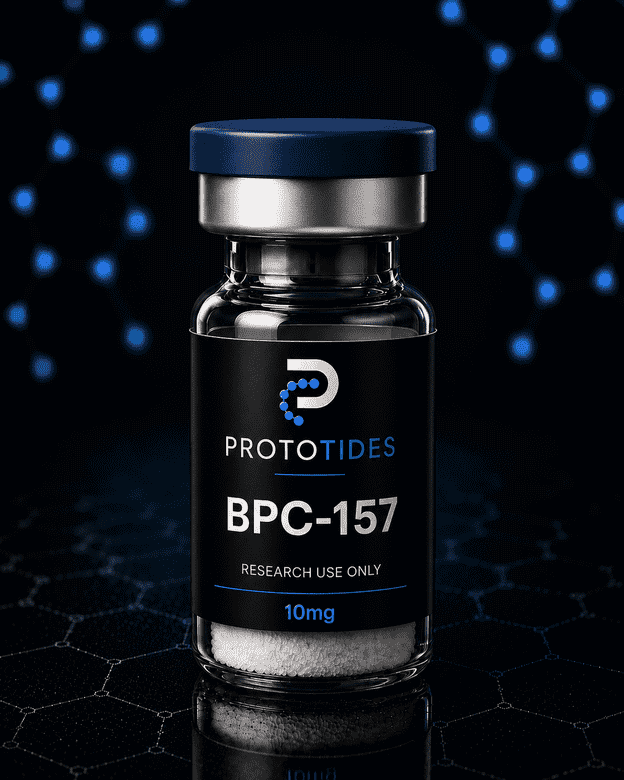
Spec sheet
- Form
- Lyophilized powder
- Storage
- -20 °C, dark
- Batch docs
- COA included
- Category
- Growth Factors
- Use
- RUO only
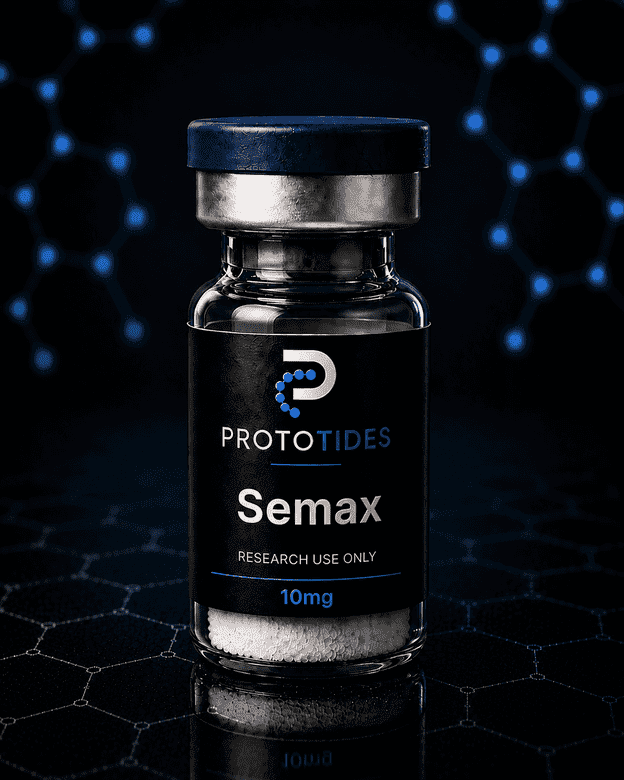
Spec sheet
- Form
- Lyophilized powder
- Storage
- -20 °C, dark
- Batch docs
- COA included
- Category
- Cognitive Research
- Use
- RUO only
Research Library
Research profile & guides
Compound Profiles
GHK-Cu Research Profile
A reference profile for GHK-Cu, the copper-binding tripeptide complex — its molecular identity, how each lot is characterized analytically, the documentation supplied, and storage considerations. Strictly research-use framing.
Documentation
Understanding Certificates of Analysis
A Certificate of Analysis is the analytical record for a specific lot of research material. This guide explains the fields a COA commonly includes, how to read them without overstating conclusions, and where a COA's limits begin.
Storage
Research Material Storage Practices
Storage requirements are material dependent and defined by product-specific documentation. This guide covers general environmental factors, packaging integrity, inventory records, and material status segregation for laboratory workflows.
For research use only. Not for human or veterinary consumption. Not a drug, food, or cosmetic. No therapeutic or diagnostic claims are made. See our research use policy.